Watercolour Brush Control
Watercolour brush control is one of the most important skills you can develop — and also one of the most misunderstood. Many beginners think great results come from expensive materials or complicated techniques, when in reality, confident painting begins with understanding how your brush moves, holds water, and responds to pressure.
Brush control isn’t about perfection. It’s about learning to work with your brush, rather than fighting it.
What Is Brush Control in Watercolour?
Brush control simply means learning how to guide your brush across the paper using:
-
pressure
-
angle
-
water amount
-
movement
Small changes in how you hold or move your brush can completely change the marks you make. Once you understand this, painting becomes more relaxed and enjoyable.
Why Brush Control Matters
Good brush control helps you:
-
create cleaner, more intentional shapes
-
paint petals, leaves, and stems with ease
-
understand how much water your brush is holding
-
avoid muddy areas and overworking the paper
-
feel more confident with every painting session
Whether you paint loose florals or detailed illustrations, brush control forms the foundation of almost every watercolour technique.
Essential Brush Strokes to Practise
Practising a few simple strokes regularly can make a huge difference.
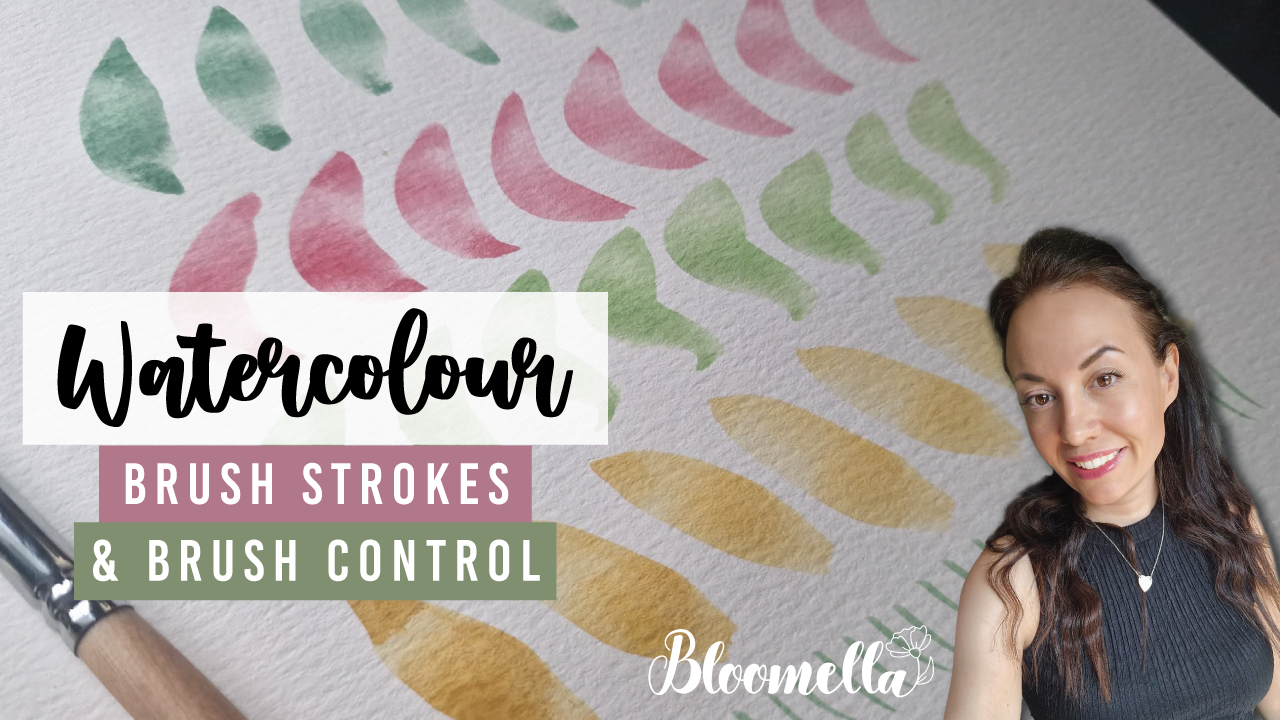
Petal Strokes
Using a rounded brush, start with firm pressure at the base of the stroke, then gradually lift as you move upward. This creates a soft, tapered shape that’s perfect for florals.
Leaf Strokes
Begin with gentle pressure, press slightly through the middle of the stroke, and lift again toward the tip. Changing pressure gives leaves their natural shape and flow.
Stem & Line Strokes
Hold your brush more upright and use light pressure, allowing just the tip of the brush to touch the paper. These strokes are ideal for stems, veins, and fine details.
Pressure, Angle & Water Control
Three simple things affect your brushstrokes more than anything else:
-
Pressure: More pressure creates wider strokes; lighter pressure creates fine lines.
-
Angle: Holding the brush flatter allows more bristles to touch the paper; holding it upright gives you more precision.
-
Water: A brush holding too much water can flood the paper, while too little water can cause scratchy marks. Learning balance comes with practice.

Practise Gently & Often
Brush control improves through repetition and play. A few minutes of warm-up strokes before painting can help you:
loosen your hand
understand your brush that day
feel more connected to the paint and paper
There’s no rush — watercolour rewards patience.
Watch the Brush Control Tutorial
I demonstrate these strokes step by step in my Watercolour Brush Control video, where we practise petals, leaves, stems, and flowing strokes together.
Continue Learning on Patreon
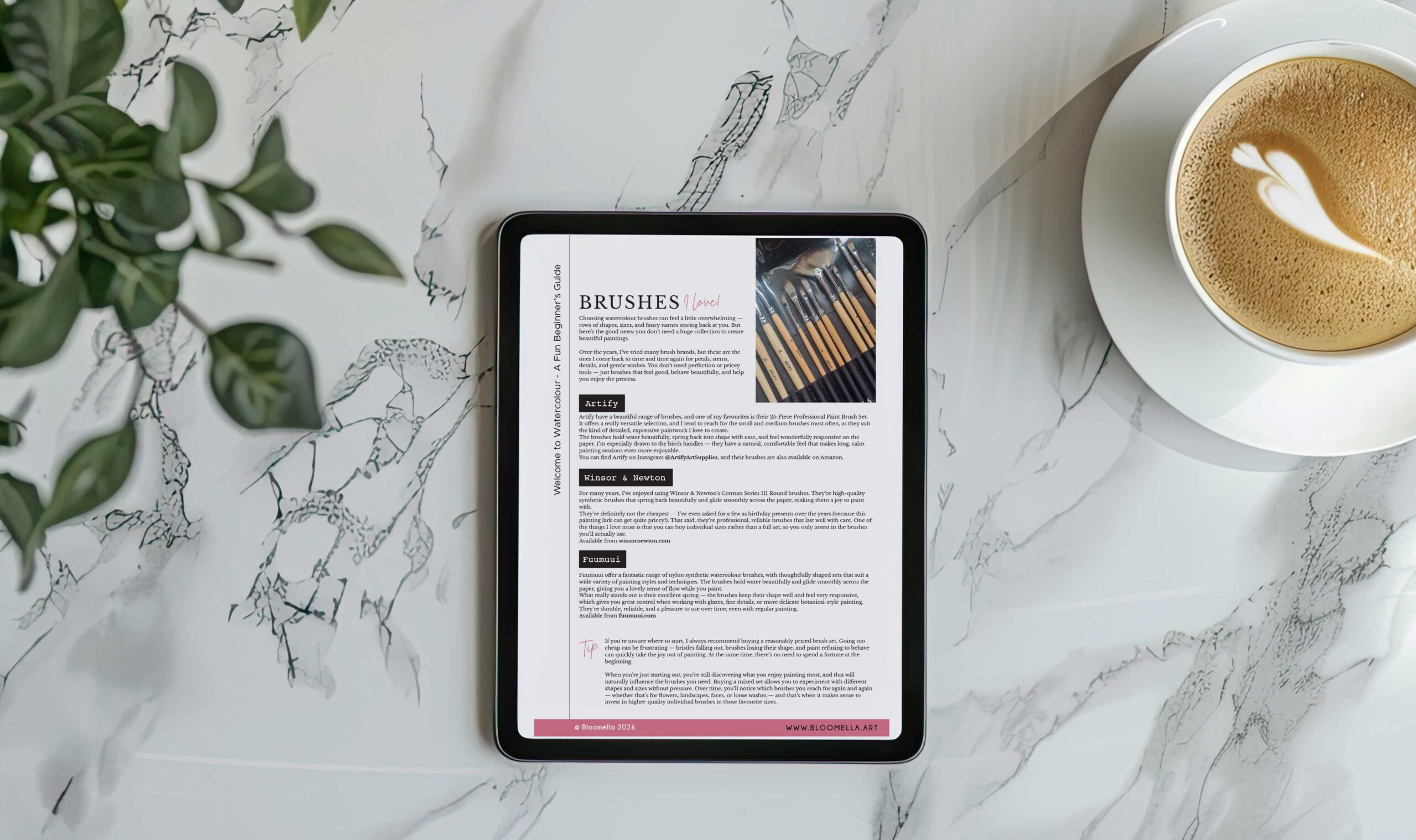
If you’d like to explore which brushes I love – check out my recommended brushes here and you’ll also find more tutorials, and printable resources over on my Patreon. It’s a calm, supportive space where we focus on building confidence and enjoying the painting process.
Watercolour is a journey, and brush control grows naturally with time, patience, and practice. Be gentle with yourself, enjoy the process, and let your brush lead the way.
Happy painting,
Michelle 🌿